This article contains affiliate links. If you purchase through these links, we may earn a small commission at no extra cost to you. This helps support our work and allows us to continue creating mindful, high-quality content.
Sleep is not only about how long you rest — it is about sleep quality, sleep continuity, and how deeply your nervous system is able to reset overnight.
In today’s modern environment — urban noise, traffic, neighbors, inconsistent sound patterns — many people struggle with fragmented sleep. Even subtle background sounds can trigger micro-arousals that reduce deep sleep (slow-wave sleep) and impair morning restoration.
This is where white noise machines have gained popularity.
But the real question is:
Do white noise machines actually improve sleep, or are they simply masking the problem?
In this comprehensive 2026 guide, we explore:
- The science behind white noise for sleep
- How white noise affects the brain
- Benefits and potential risks
- Who should use a white noise machine
- Who should avoid it
- The best white noise machines available on Amazon
- How to use white noise correctly for deep sleep support
What Is a White Noise ?
A white noise machine is a device that produces a consistent, broadband sound containing all audible frequencies at equal intensity. The result is a steady, neutral sound — often described as a “gentle static” or “soft fan” noise.
Unlike sudden environmental sounds (doors, traffic, voices), white noise is continuous and predictable.
Most modern white noise machines for sleeping include:
- Multiple sound profiles (white, pink, brown noise)
- Nature sounds (rain, ocean, forest)
- Adjustable volume
- Timers
- Night light features
- Portable travel options
The Science Behind White Noise and Sleep
To understand whether white noise improves sleep, we must examine how the brain processes sound during sleep.
1. Auditory Processing During Sleep
Even when asleep, the brain continues to monitor the environment through the thalamus — the sensory relay center. Sudden noises trigger arousal responses, even if you do not fully wake up.
These micro-arousals:
- Disrupt slow-wave sleep
- Reduce REM stability
- Increase heart rate variability
- Elevate stress hormone responses
A stable sound environment reduces these fluctuations.
2. Sound Masking Effect
White noise works primarily through auditory masking.
It raises the baseline sound level in the room so that sudden noises (like a door closing) are less noticeable relative to the background.
Instead of:
Silence → Sudden Noise → Arousal
You get:
Steady Sound → Slight Variation → Minimal Arousal
This smoothing effect helps preserve sleep continuity.
3. Research Evidence
Several clinical studies support white noise for sleep:
• A 2017 study published in Frontiers in Neurology found that white noise reduced sleep onset latency in hospital patients exposed to environmental noise.
• A 2021 systematic review showed mixed but promising evidence that continuous background sound may improve sleep in noisy environments.
• Research in neonatal intensive care units has shown white noise helps infants fall asleep faster.
However, results vary depending on individual sensitivity and sound level.
Conclusion:
White noise is most effective in moderately noisy environments rather than completely silent rooms.
Types of Noise: White vs Pink vs Brown
White Noise
Equal intensity across frequencies. Sounds like static.
Best for: Strong masking.
Pink Noise
Lower frequencies emphasized. Softer, more natural.
Research suggests pink noise may enhance slow-wave sleep and memory consolidation.
Brown Noise
Even deeper, bass-heavy sound.
Often preferred by people who find white noise too sharp.
Many modern best white noise machines 2026 include all three.
Benefits of White Noise Machines
1. Reduced Sleep Onset Latency
Helps users fall asleep faster in noisy environments.
2. Improved Sleep Continuity
Reduces awakenings from environmental disruptions.
3. Anxiety Reduction
Predictable sound may calm an overactive nervous system.
4. Helpful for Shift Workers
Supports daytime sleep.
5. Travel Sleep Support
Useful in hotels or shared accommodations.
Potential Drawbacks
Professional evaluation requires balance.
1. Sound Dependency
Some users feel unable to sleep without it.
2. Volume Risk
Excessively loud settings (above 50 dB) may affect hearing over long periods.
3. Not a Cure for Insomnia
Does not address cognitive or hormonal causes.
4. May Not Help in Silent Homes
If your home is already quiet, benefits may be minimal.
Who Should Use a White Noise Machine?
• Light sleepers
• Urban residents
• Parents
• Shift workers
• Apartment dwellers
• People with noise sensitivity
Who Should Avoid or Use Caution?
• Individuals with tinnitus (consult audiologist)
• Those with hyperacusis
• Infants (use low volume only)
• People sleeping in already quiet environments
Best White Noise Machines for Sleep (2026)
1. Hatch Restore 3 Sound Machine (Best All‑In‑One Sleep Systemt)
Overview
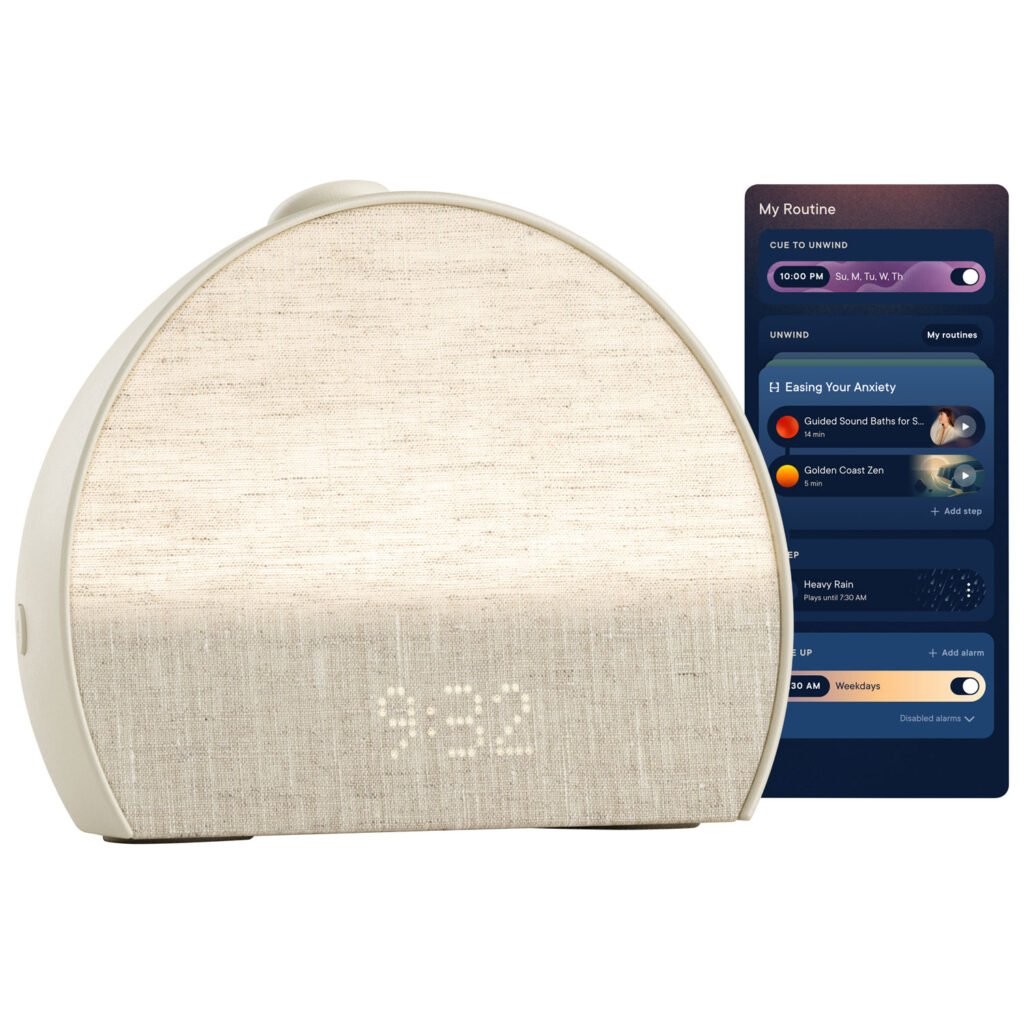
The Hatch Restore 3 Sound Machine is a premium sleep device that combines sound masking, customizable bedtime routines, sunrise alarm, and nightlight features. Controlled via app or directly on the device, it offers a flexible sleep support system that works for adults and kids alike.
Key Features
- 80+ soundscapes including white, pink & brown noise
- Sunrise alarm with gradual light increase
- App control and Wi‑Fi connectivity
- Custom sleep routines
- Dimmable & customizable nightlight
Pros
- Comprehensive sleep support beyond sound
- Excellent sound quality
- Adjustable routines for consistent sleep cues
- Great for multi‑person bedrooms
Cons
- Higher price range
- App subscription may be required for full library
Best For: People who want a complete sleep ecosystem, not just white noise.
2. Adaptive Sound Technologies Sound+Sleep SE
Overview
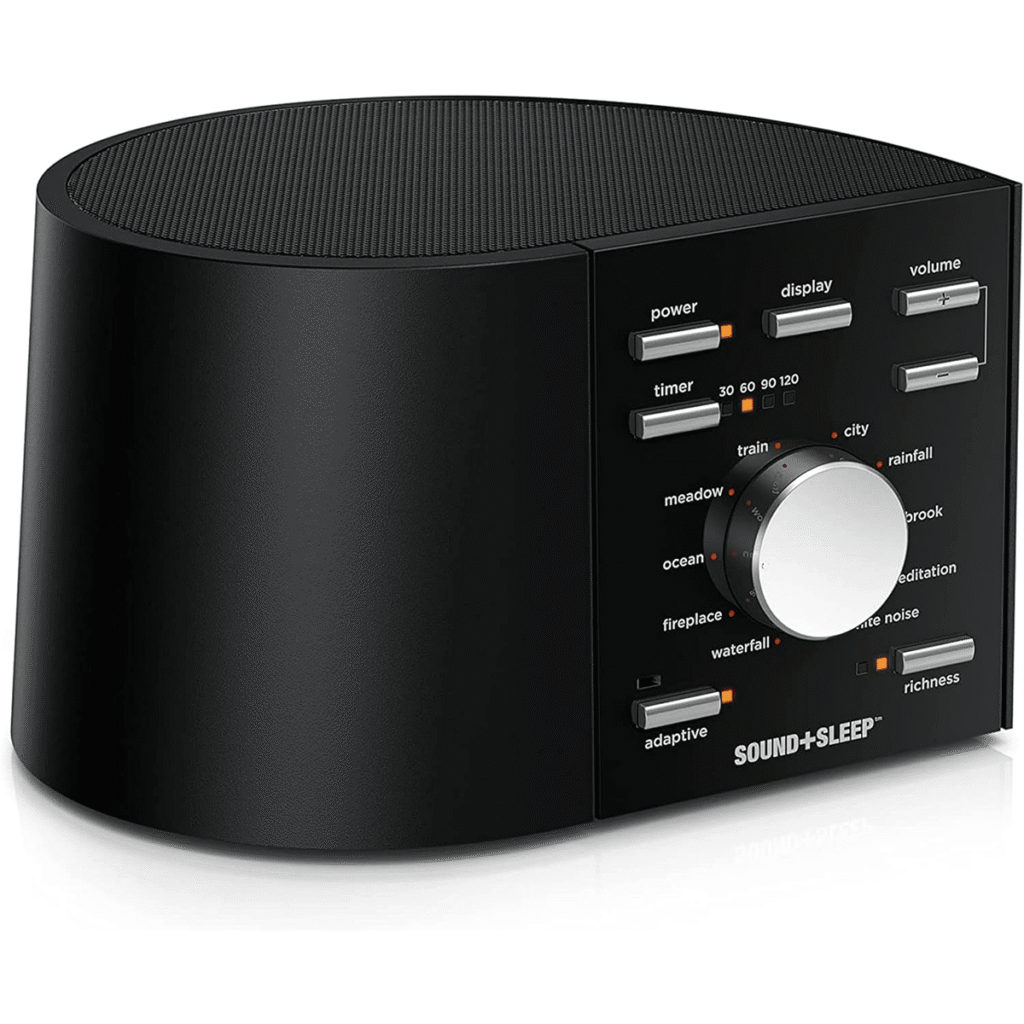
The Sound+Sleep SE uses adaptive sound technology that analyzes ambient noise and adjusts audio output in real time to better mask interruptions. It includes a large library of natural sound profiles along with white, pink, and brown noise options.
Key Features
- Adaptive sound technology
- 64 unique sound profiles
- Auto‑adjusting volume based on room noise
- High‑fidelity drivers
Pros
- Outstanding masking performance
- Adaptive audio responds to changes
- Very natural soundscape options
Cons
- Larger physical size
- Higher cost than basic models
Best For: Sleepers in noisy environments who want responsive masking.
3. LectroFan EVO White Noise Sound Machine
Overview
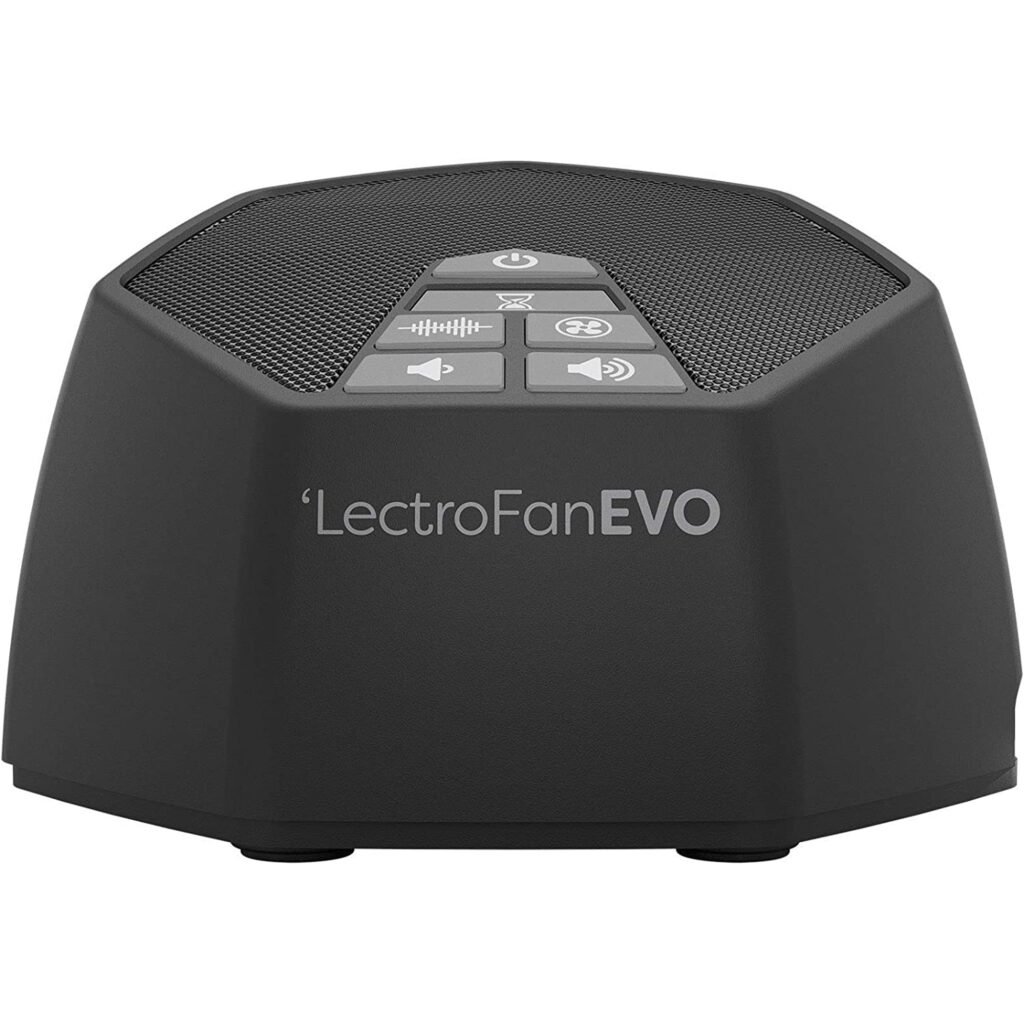
The LectroFan EVO builds on the classic LectroFan design with improved sound clarity, additional noise profiles, and a sleek modern look. It includes a wide range of colored noise variations and is known for consistent masking performance.
Key Features
- 30+ non‑looping sound options
- Enhanced white, pink, and brown noise
- Simple dial control
- USB and AC power
Pros
- Large sound library
- Non‑looping audio eliminates interruptions
- Excellent masking for urban noise
Cons
- No nature or ambient soundscapes
- No nightlight or smart features
Best For: Users who want powerful sound masking without extra bells and whistles.
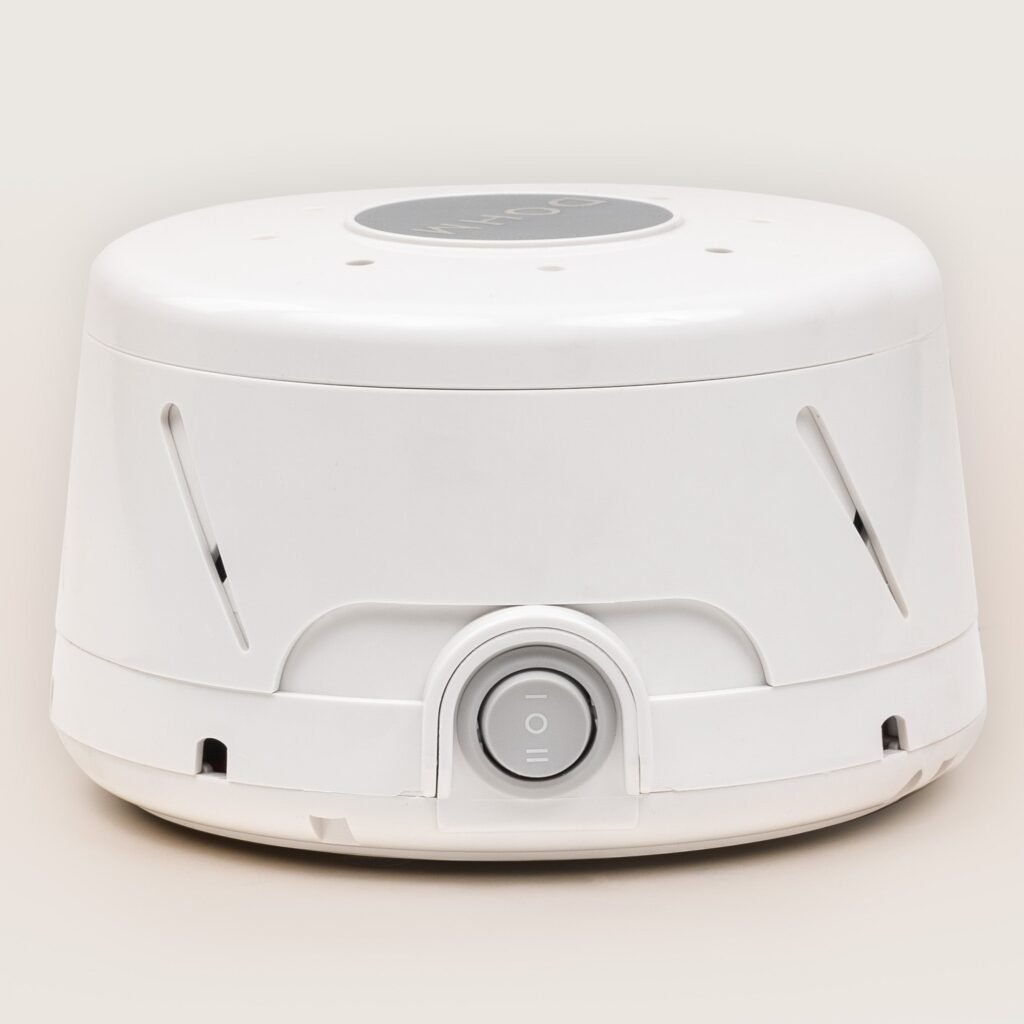
4. Marpac Dohm Classic (Now Branded as Yogasleep Dohm)
Overview
The original fan‑based sound machine, the Yogasleep Dohm Classic, uses real mechanical white noise production — not digital loops. Its sound is created by internal fan mechanics that generate natural, non‑repetitive noise unique to this model.
Key Features
- Adjustable tone and volume
- Real, fan‑based sound production
- Durable build quality
Pros
- Natural analog sound
- No digital artifacts
- Trusted classic design
Cons
- Fewer sound options
- Does not include pink/brown noise profiles
- No app or smart features
Best For: People who prefer natural, mechanical sound and timeless reliability.
5. Sound Oasis Bluetooth Sound Machine
Overview
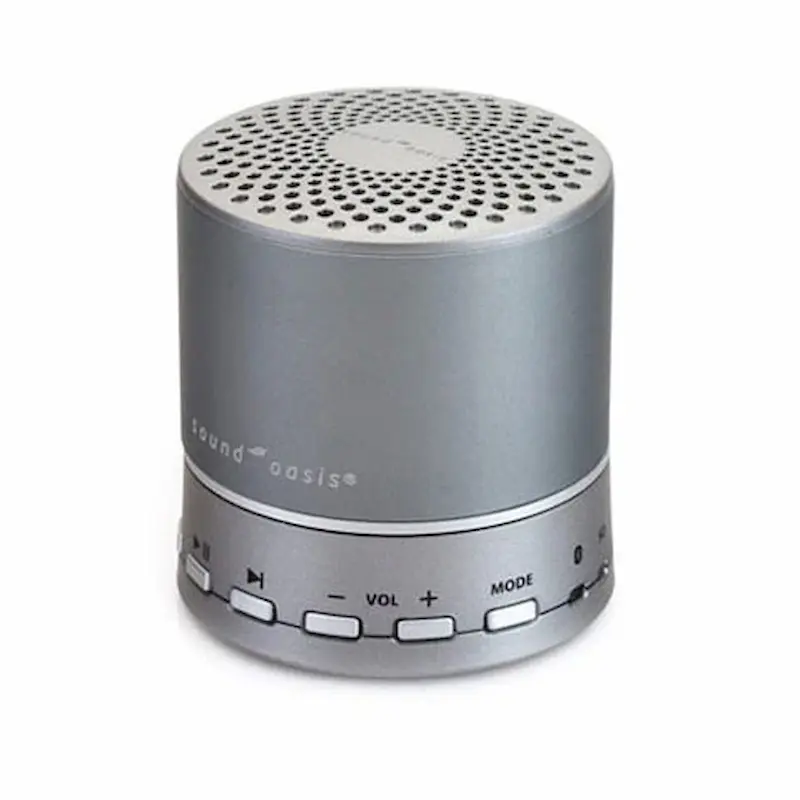
The Sound Oasis Bluetooth Sound Machine is a portable sleep sound device that doubles as a Bluetooth speaker and white noise generator. It plays a selection of non-looping relaxing sounds, including nature, white, pink, and brown noise — designed to help block environmental noise, support relaxation, and improve sleep continuity. You can also stream audio from any Bluetooth-enabled device, making it a versatile sound companion for home, travel, or office.
Key Features
- Built-in micro SD card with 20+ non-looping sound tracks including nature, white, pink and brown noise
- Bluetooth speaker functionality with ~30 ft wireless range
- Rechargeable lithium battery for cordless use (5–8 hours typical)
- Portable and compact design — useful for travel or bedroom nightstand
- Adjustable volume controls for customized sound masking
Pros
- Combines white noise machine + Bluetooth speaker, adding everyday versatility
- Multiple non-looping sounds help mask sudden noise interruptions
- Portable size ideal for travel and nightstand use
- Adjustable volume for tailored sound levels
Cons
- Mixed user ratings (some reports note average performance)
- Not as feature-rich as premium sleep machines with routines or apps
- Battery life may vary with Bluetooth usage
Best For:
Sleepers who want a portable white noise machine that also works as a Bluetooth speaker, suitable for masking noise, travel, and everyday relaxation.
How to Use White Noise Correctly
For best results:
• Keep volume between 40–50 dB
• Place machine 1–2 meters away
• Use consistently
• Combine with dark environment
• Avoid extremely high volume
White noise works best when part of a broader sleep hygiene protocol including:
- Consistent sleep schedule
- Low evening light exposure
- Limited caffeine
- Relaxation ritual
Can White Noise Improve Deep Sleep?
The evidence suggests:
White noise improves sleep continuity, which indirectly supports deep sleep preservation by reducing arousals.
However, it does not directly increase slow-wave production in the same way pink noise stimulation may.
Therefore:
White noise is a protective tool, not a deep sleep enhancer by itself.
Final Verdict: Are White Noise Machines Worth It?
For individuals exposed to environmental noise, a white noise machine for sleep can significantly improve sleep stability and reduce awakenings.
For those in quiet homes with primary insomnia, cognitive strategies may be more effective.
Used properly, white noise machines are:
Safe
Non-invasive
Affordable
Evidence-supported in noisy settings
They are not a cure — but they are a powerful environmental regulator.